

Guides
Actualités, tutoriels et guides pour gérer votre infrastructure.
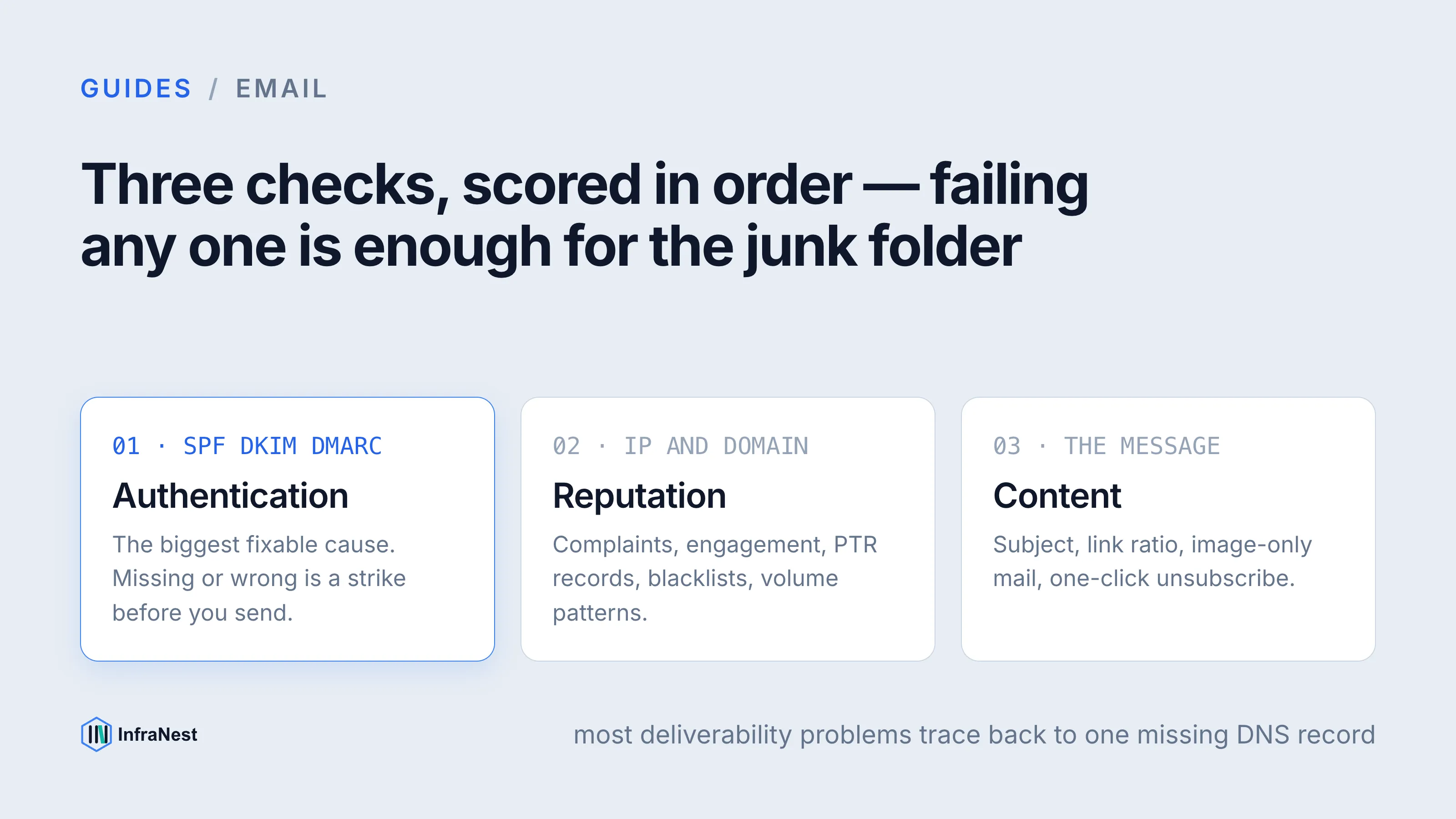
Why your emails go to spam (and how to fix it)
Emails land in spam because of broken authentication, poor sender reputation, or content that trips filters — here's how to diagnose and fix each one.
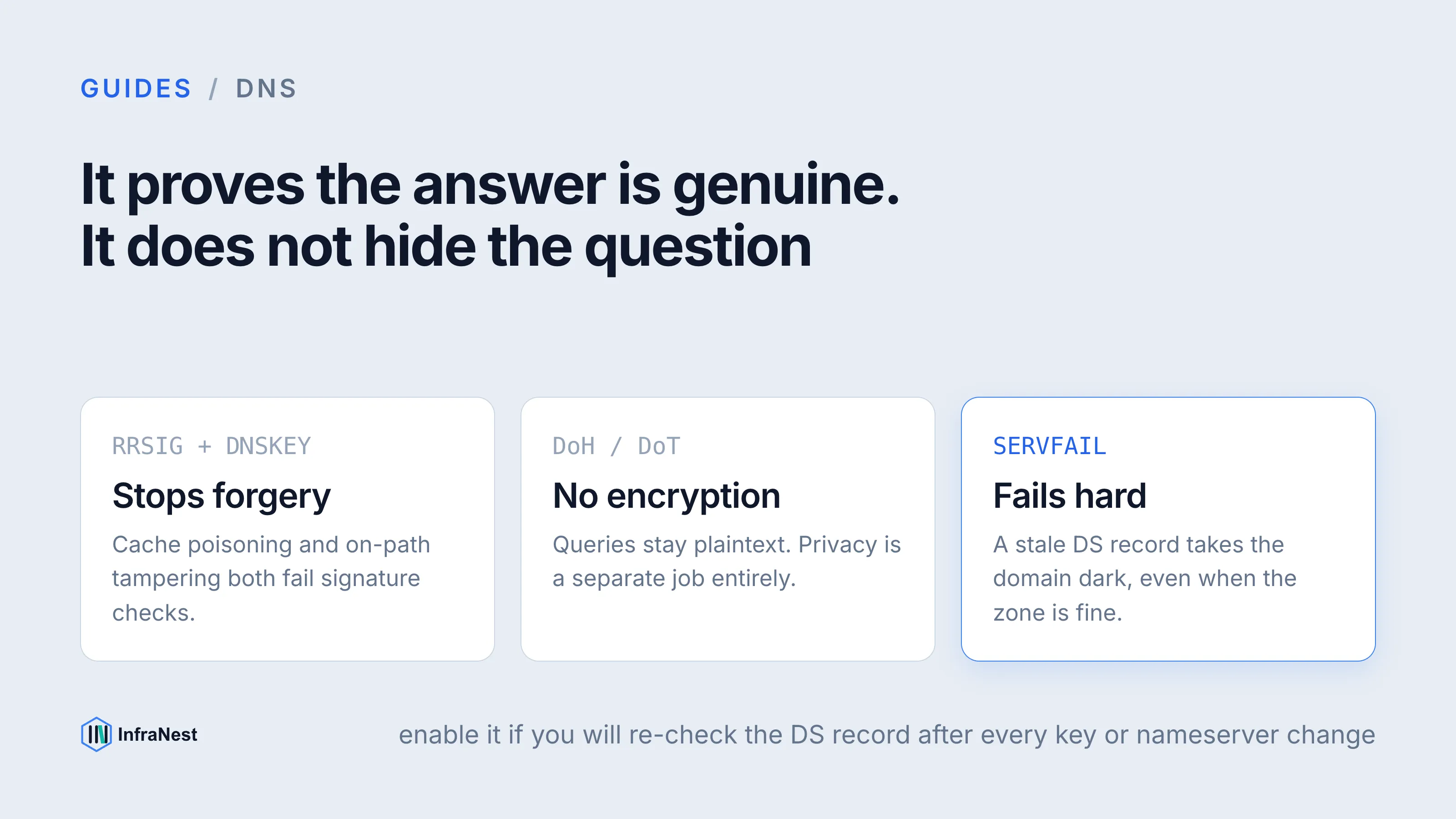
What is DNSSEC and should you enable it?
DNSSEC stops attackers from forging DNS answers, but it's opt-in everywhere and easy to misconfigure. Here's the threat it solves, the trade-offs, and when to turn it on.
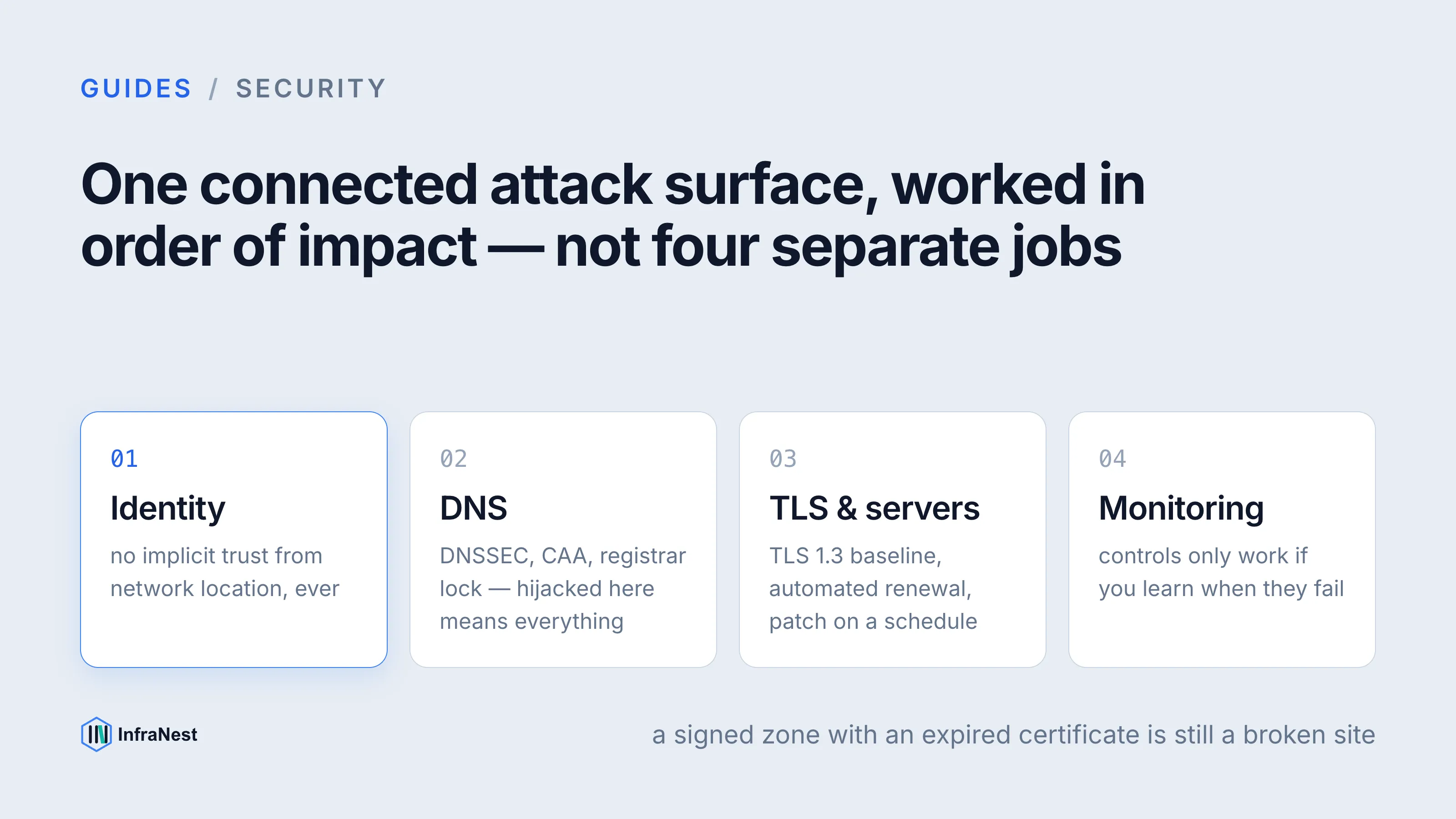
How to secure your infrastructure in 2026: a practical checklist
A practitioner's checklist for securing DNS, TLS, servers and monitoring in 2026 — covering zero trust, DNSSEC, certificate automation and supply chain hygiene.
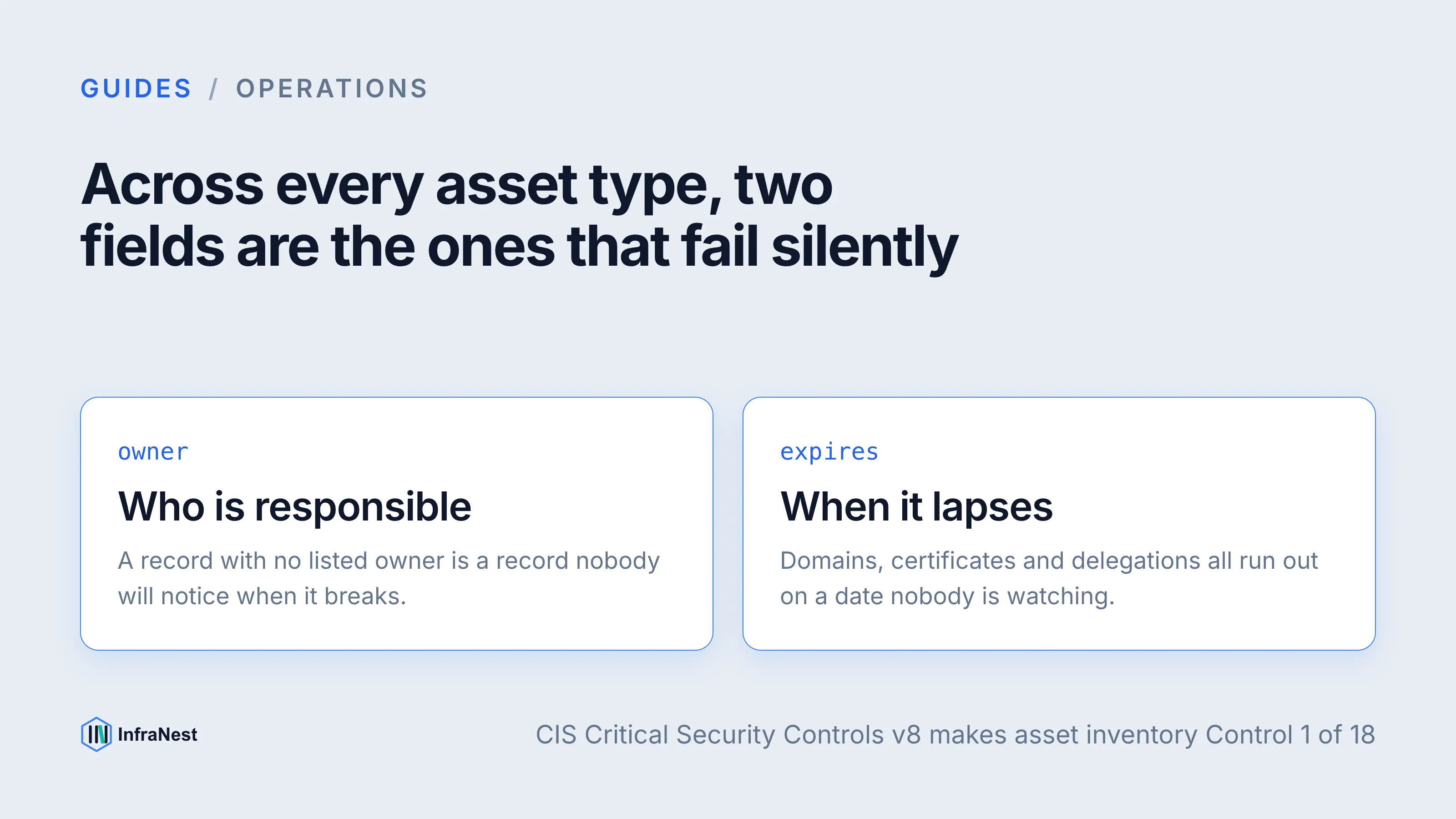
Why infrastructure inventory is important (and what to track)
An unmanaged domain, a forgotten server, or an expired certificate can take down production. Here's why infrastructure inventory is the foundation of reliable, secure operations.
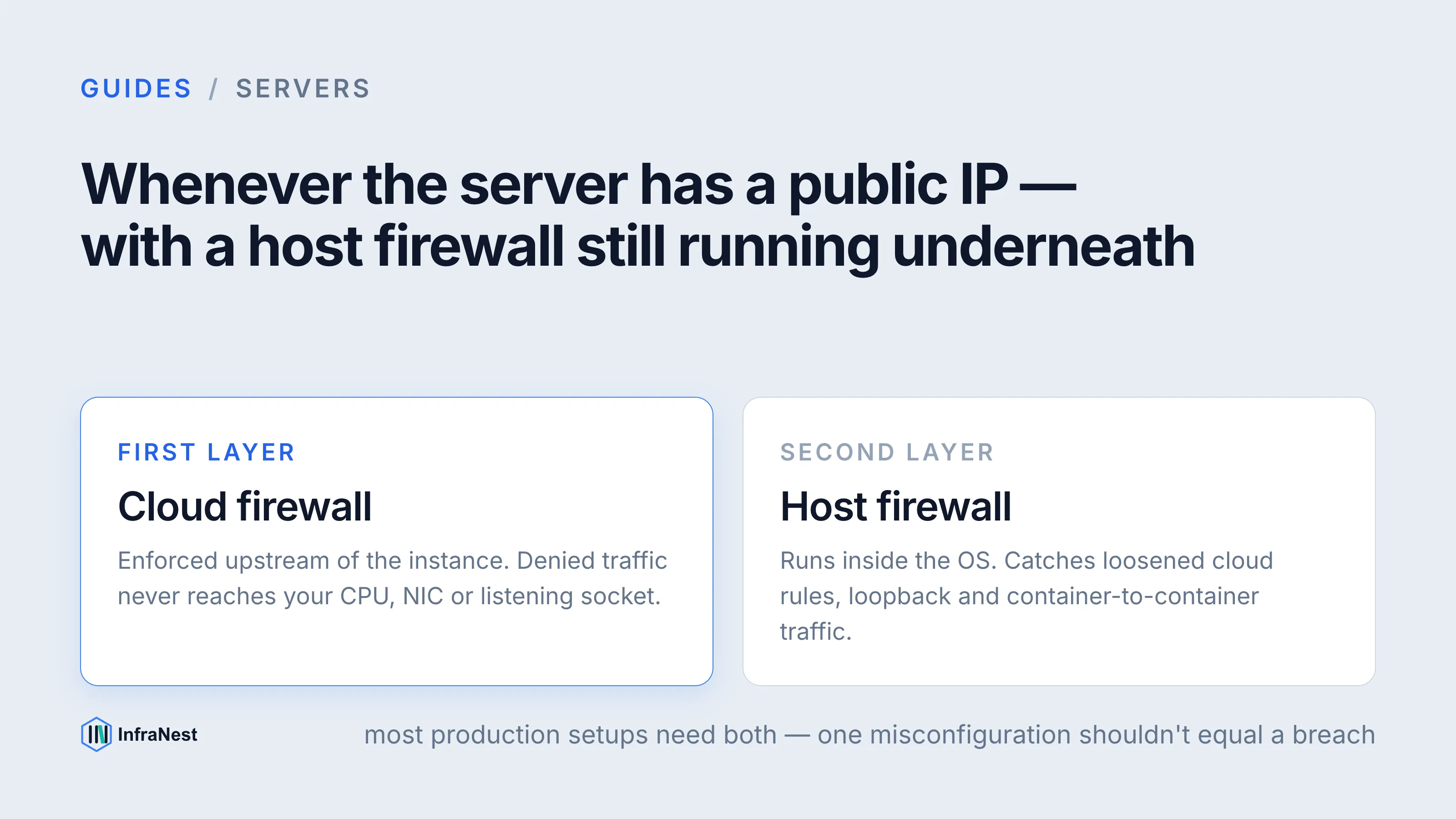
When should you use cloud firewalls?
Cloud firewalls filter traffic before it reaches your server; host firewalls filter it after. Here's when to use each, and the sane defaults to start with.
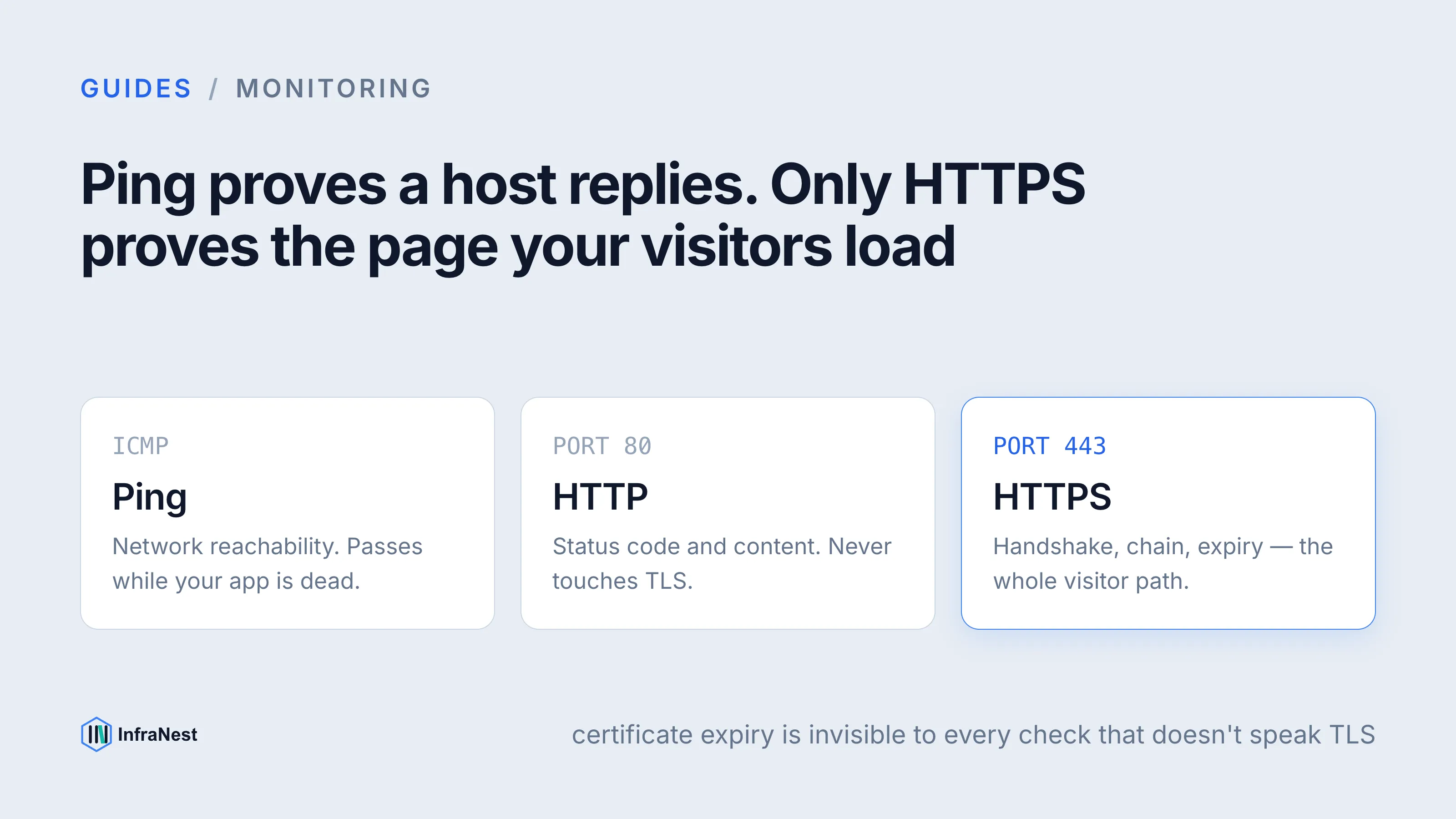
Ping vs HTTP vs HTTPS monitoring: what each check actually proves
Ping, HTTP and HTTPS checks answer different questions about uptime. Here's what each one actually proves and why relying on ping alone is risky.
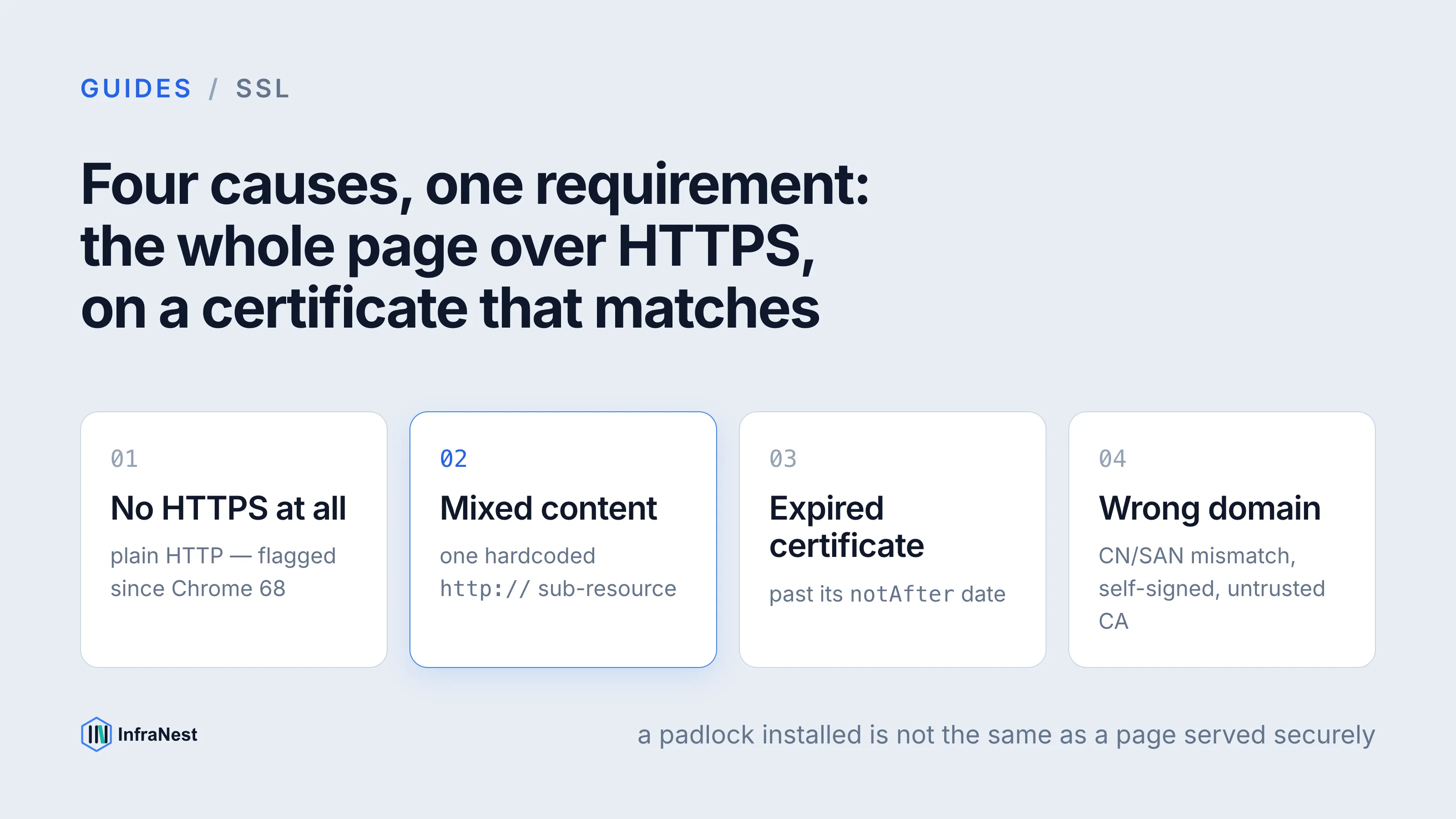
Why browsers show "Not Secure": causes and fixes
Understand exactly why Chrome, Firefox and Safari flag a site as "Not Secure" and how to fix each cause, from missing HTTPS to mixed content and bad certificates.
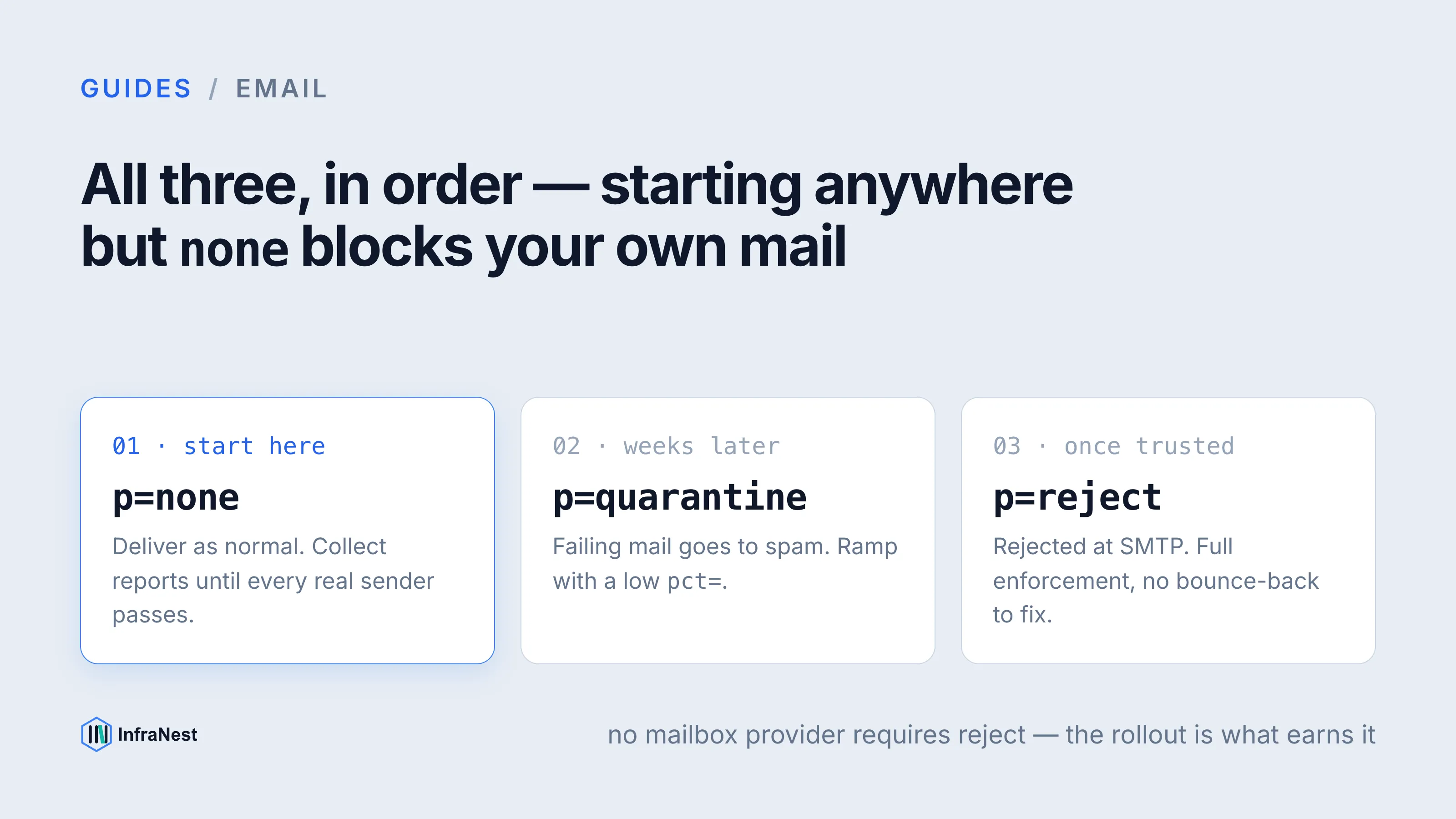
DMARC policy: none, quarantine or reject — which should you use?
A practical guide to choosing p=none, quarantine or reject in your DMARC record, and how to move to full enforcement without breaking legitimate mail.
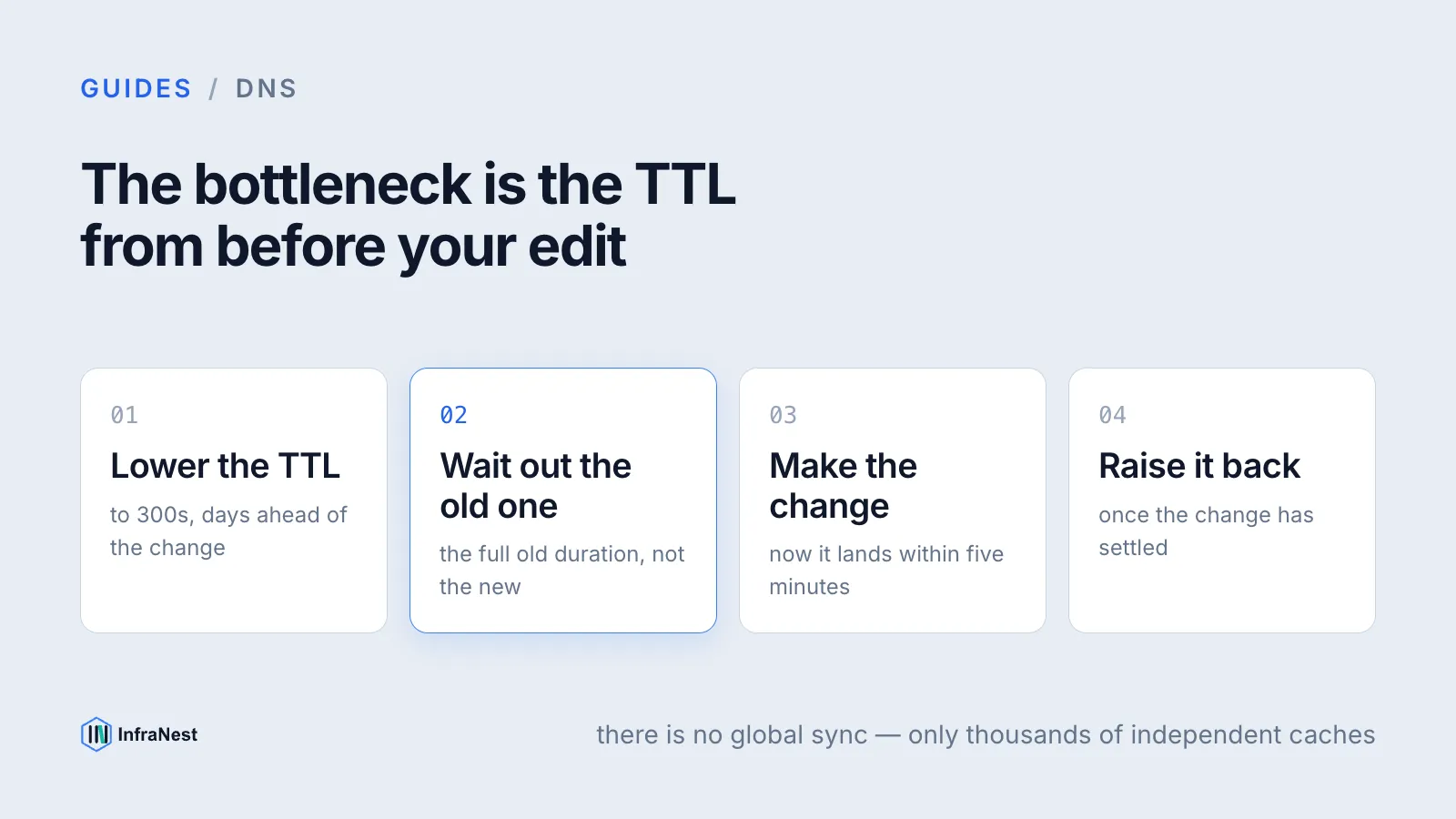
DNS propagation explained: why changes take time and how to check
DNS propagation isn't a global sync — it's TTL-based caching. Here's what actually controls the delay and how to check a change safely.
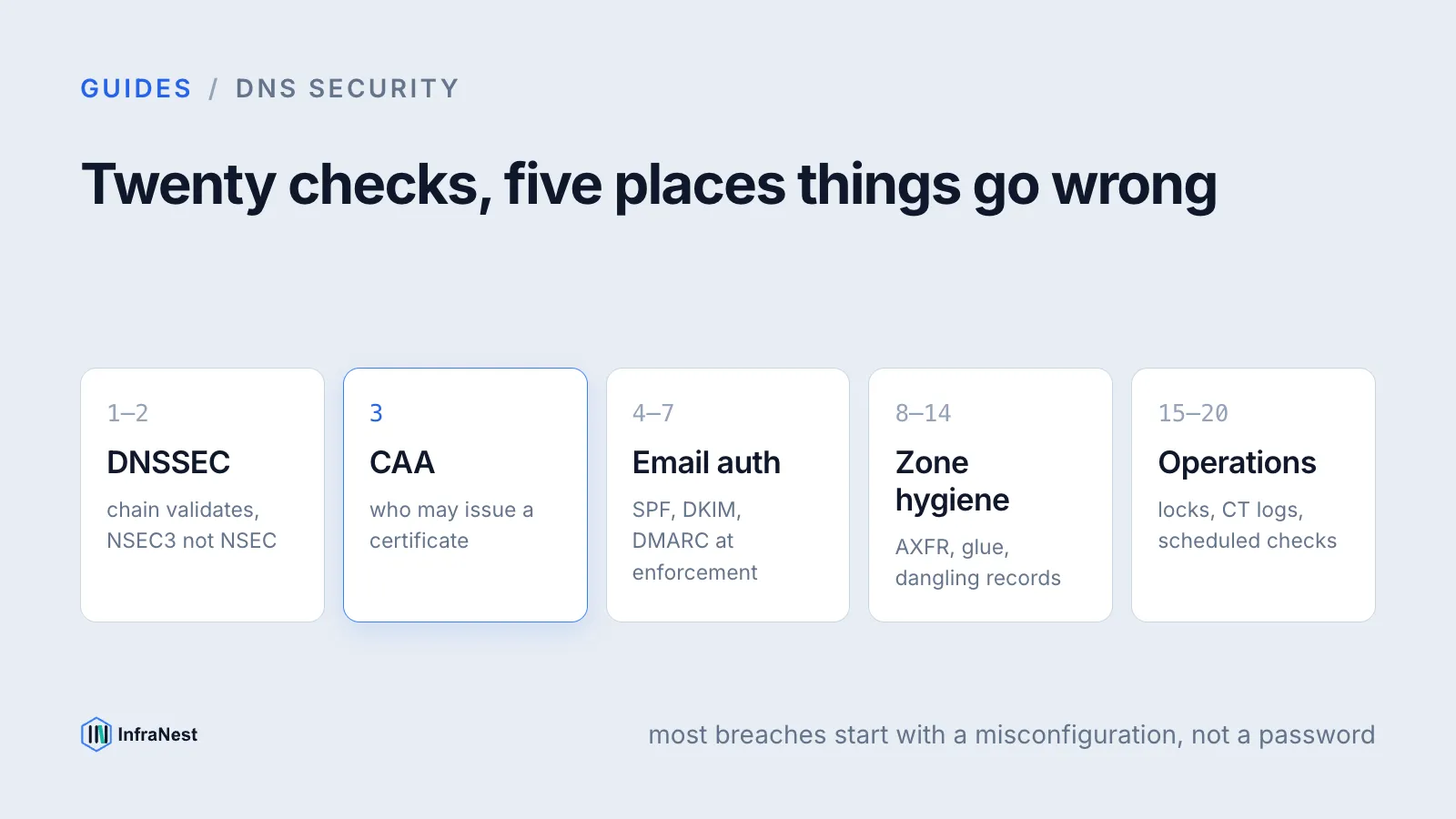
20 DNS security checks every domain should pass
A practical DNS security checklist covering DNSSEC, CAA, SPF/DKIM/DMARC, zone transfers and nameserver hygiene — with commands you can run today.
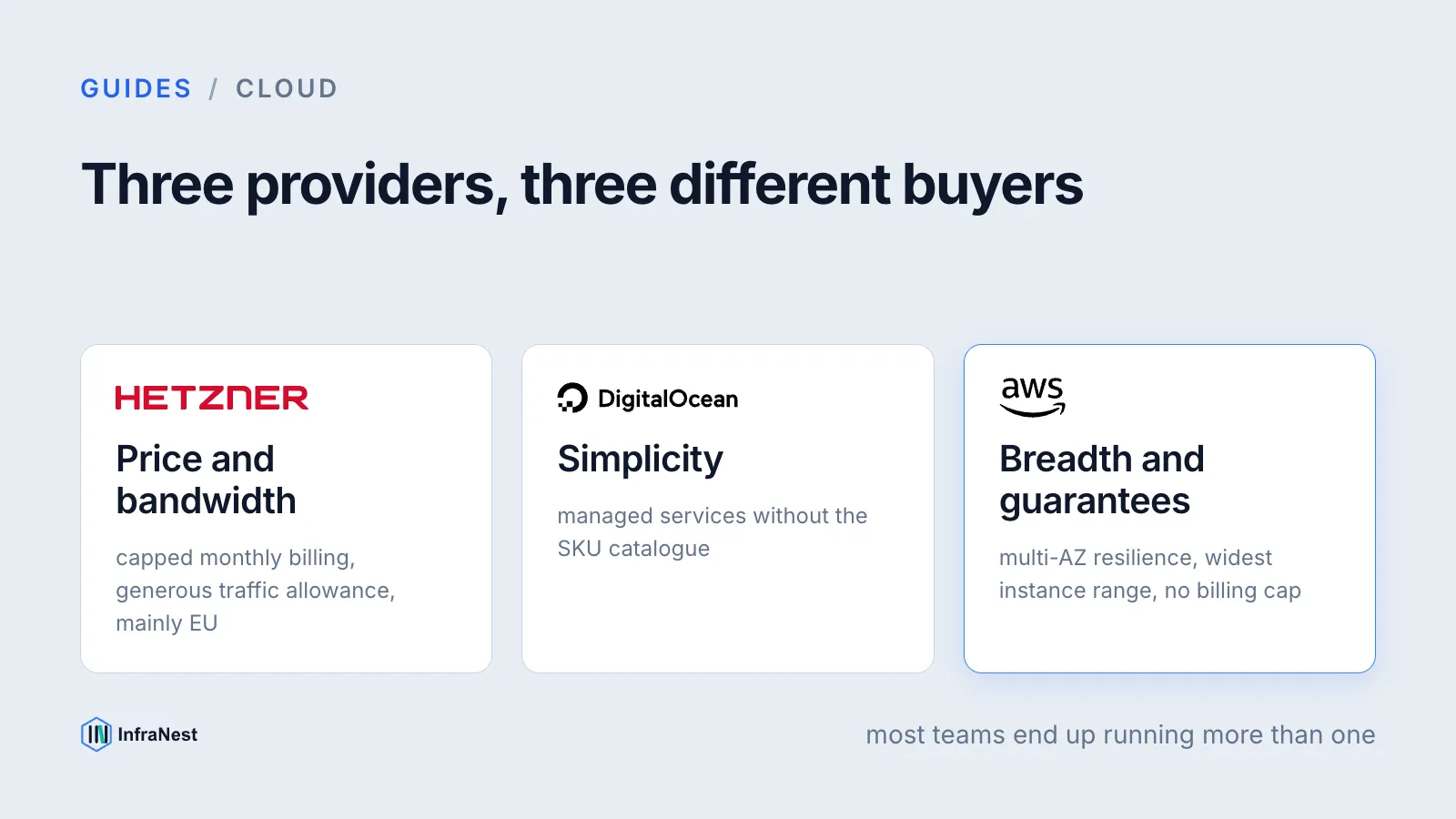
Hetzner vs DigitalOcean vs AWS: price, performance and features compared
An even-handed comparison of Hetzner, DigitalOcean and AWS on pricing, instance types, bandwidth, SLAs and Kubernetes — so you can pick the right one for the job.
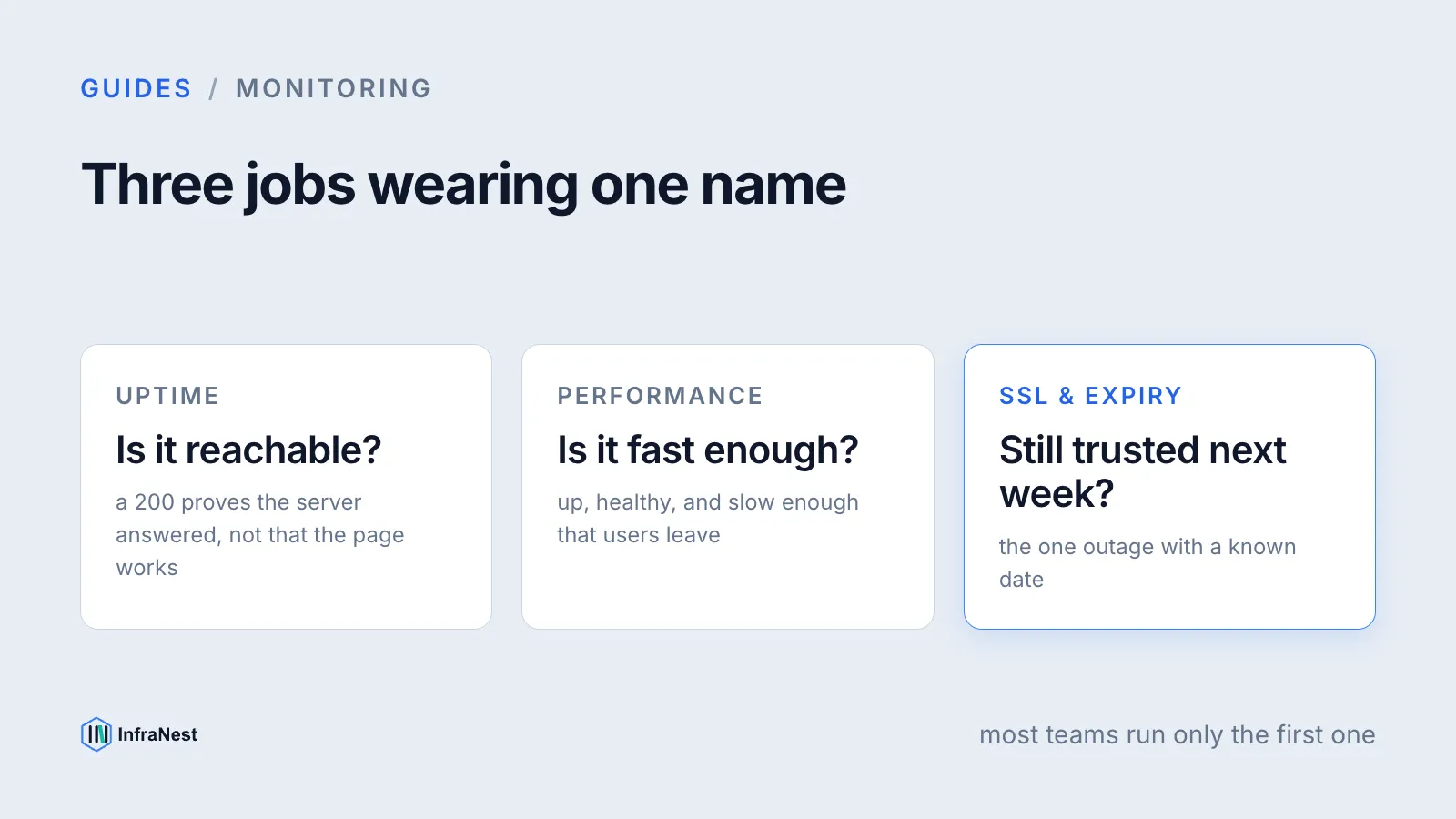
Website monitoring explained: uptime, performance and SSL checks
A practical breakdown of uptime, performance and SSL/expiry monitoring — what each one actually catches, how often to check, and where they overlap.
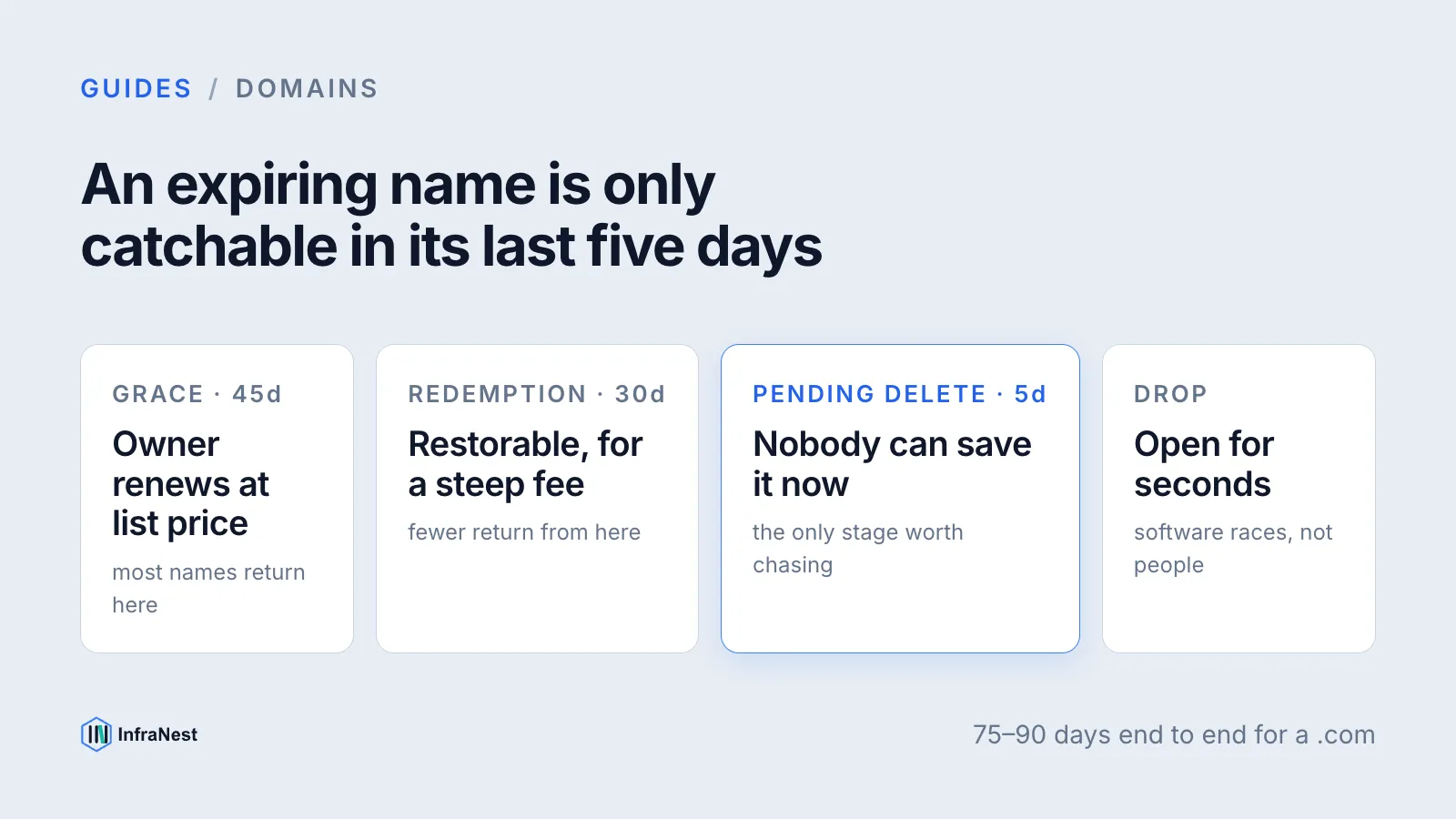
How to catch an expiring domain: drop-catching & backorders explained
What really happens when a domain expires, how drop-catching works, and when to use a backorder vs your own registrar — a practical guide to catching the names you want.
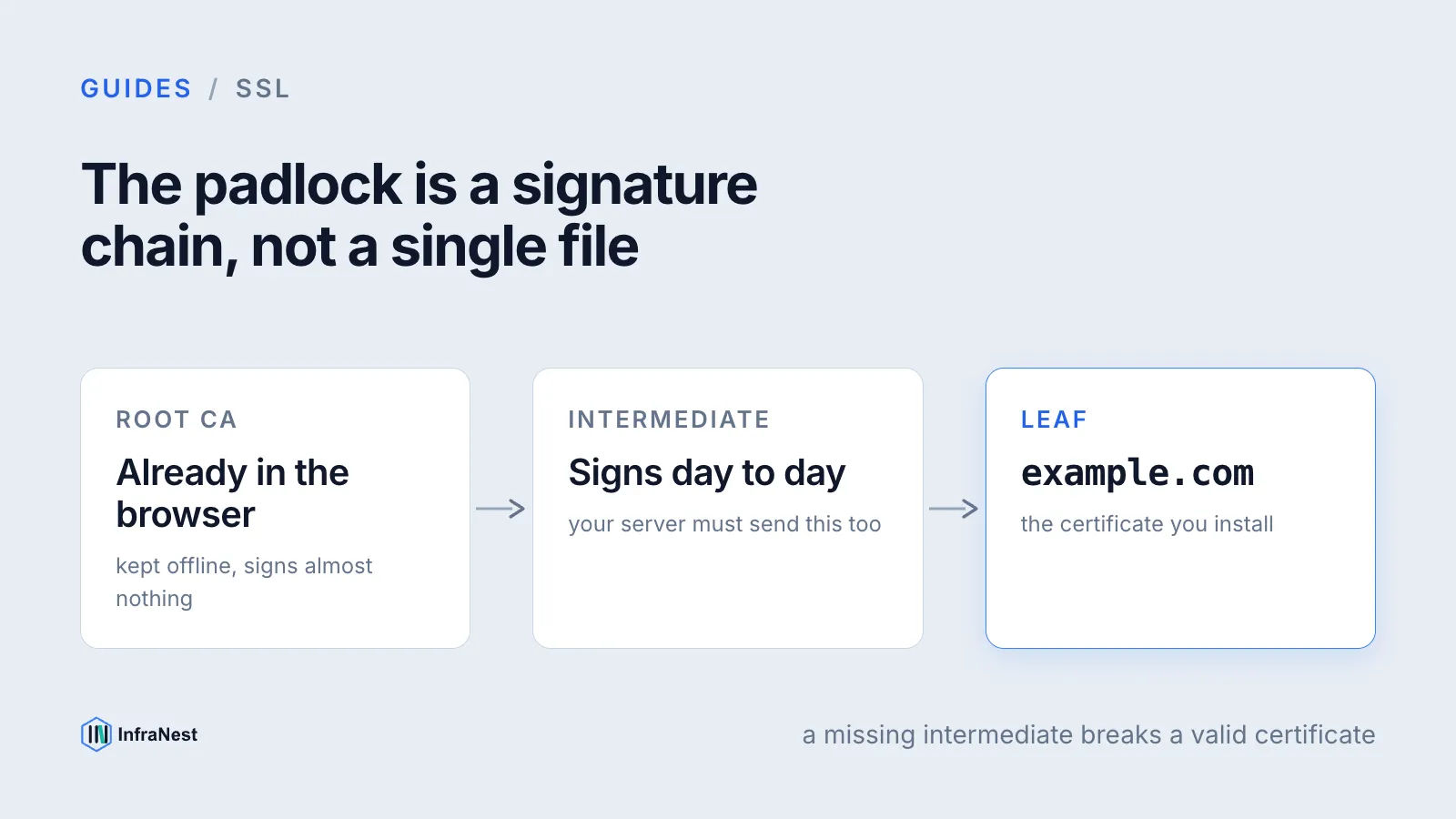
SSL certificates explained: what they are and how the chain of trust works
A plain-English guide to how SSL/TLS certificates work, why the chain of trust matters, and how DV, OV and EV validation actually differ.
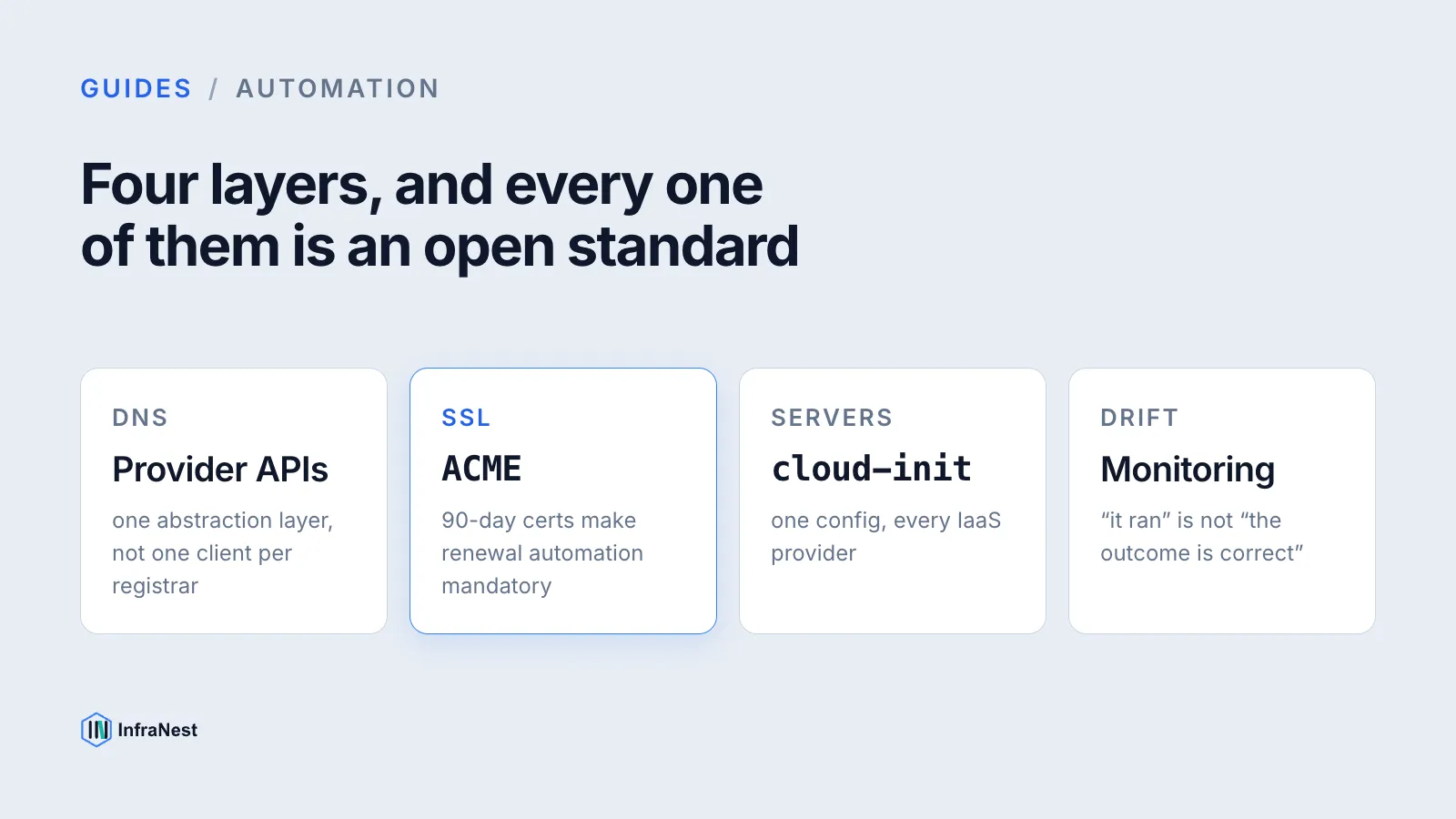
How to automate DNS, SSL and server tasks across every provider
A practical guide to automating DNS changes, certificate renewals and server actions across multiple providers, plus where centralised management beats juggling five dashboards.
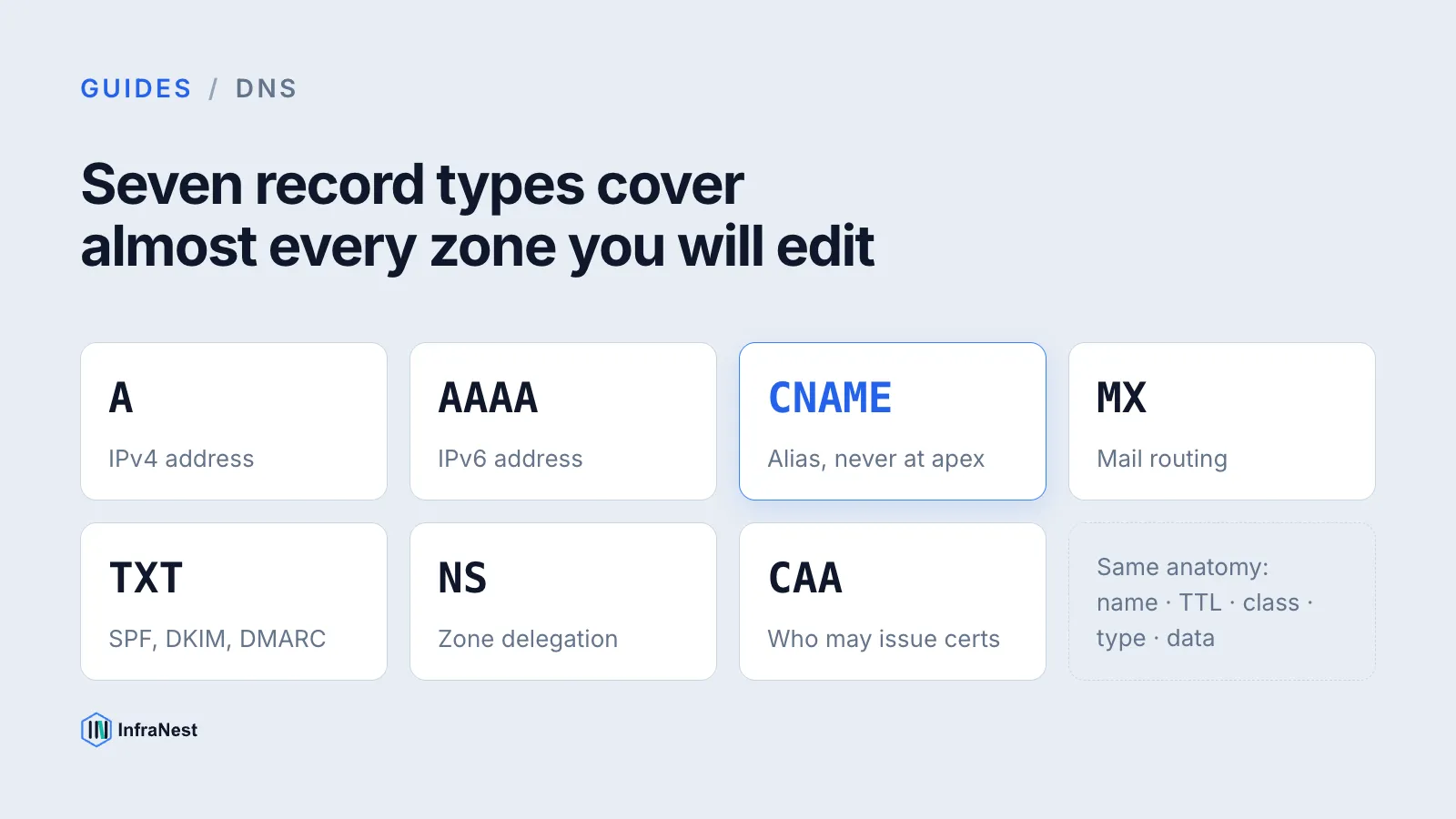
Complete DNS record guide: A, AAAA, CNAME, MX, TXT, NS & CAA
A practitioner's reference to the core DNS record types — A, AAAA, CNAME, MX, TXT, NS and CAA — with a real example and the standards behind each.
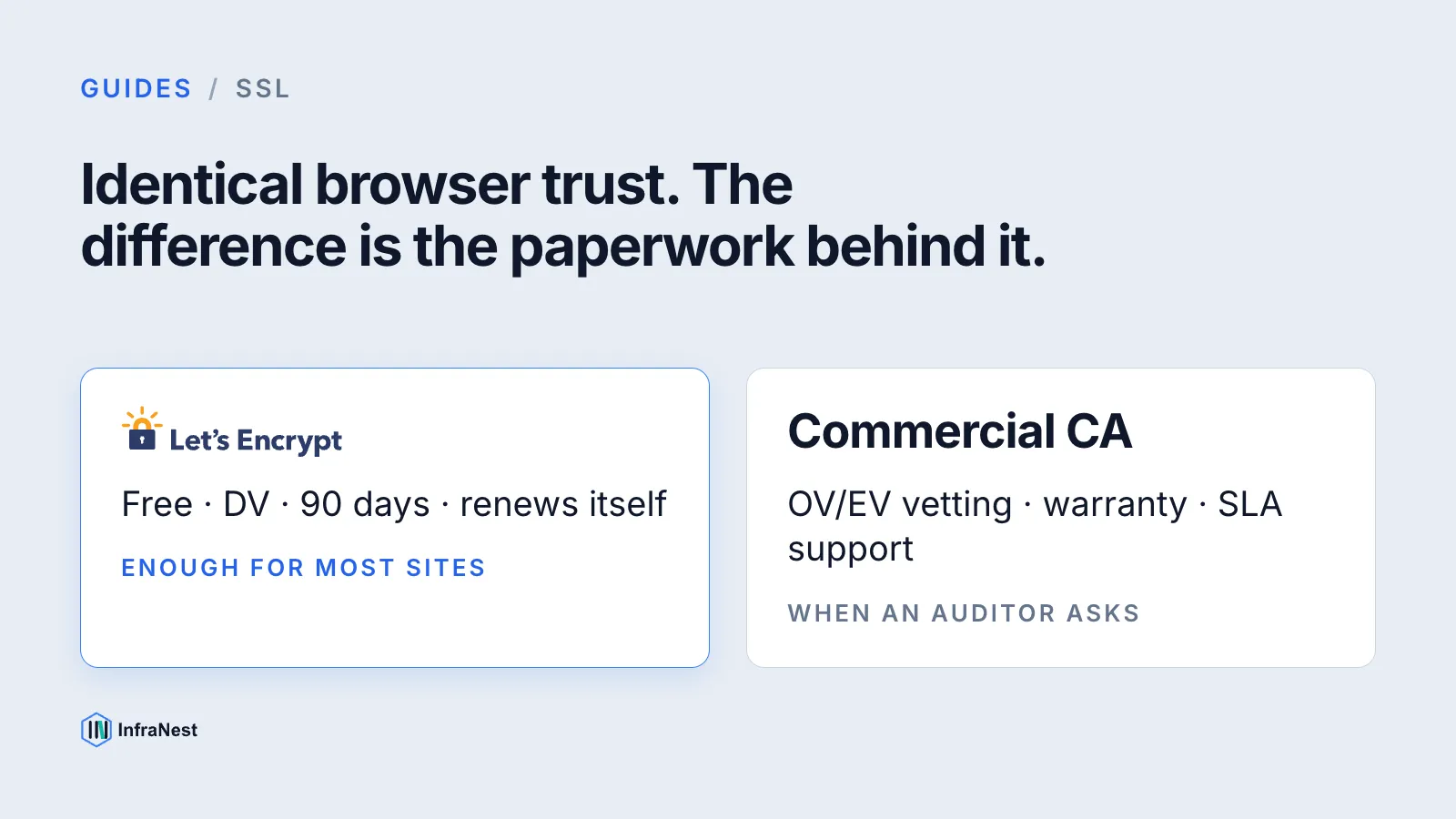
Let's Encrypt vs commercial SSL certificates: which do you actually need?
A practical, even-handed comparison of Let's Encrypt and paid SSL/TLS certificates, covering validation levels, lifetimes, warranties and when each makes sense.
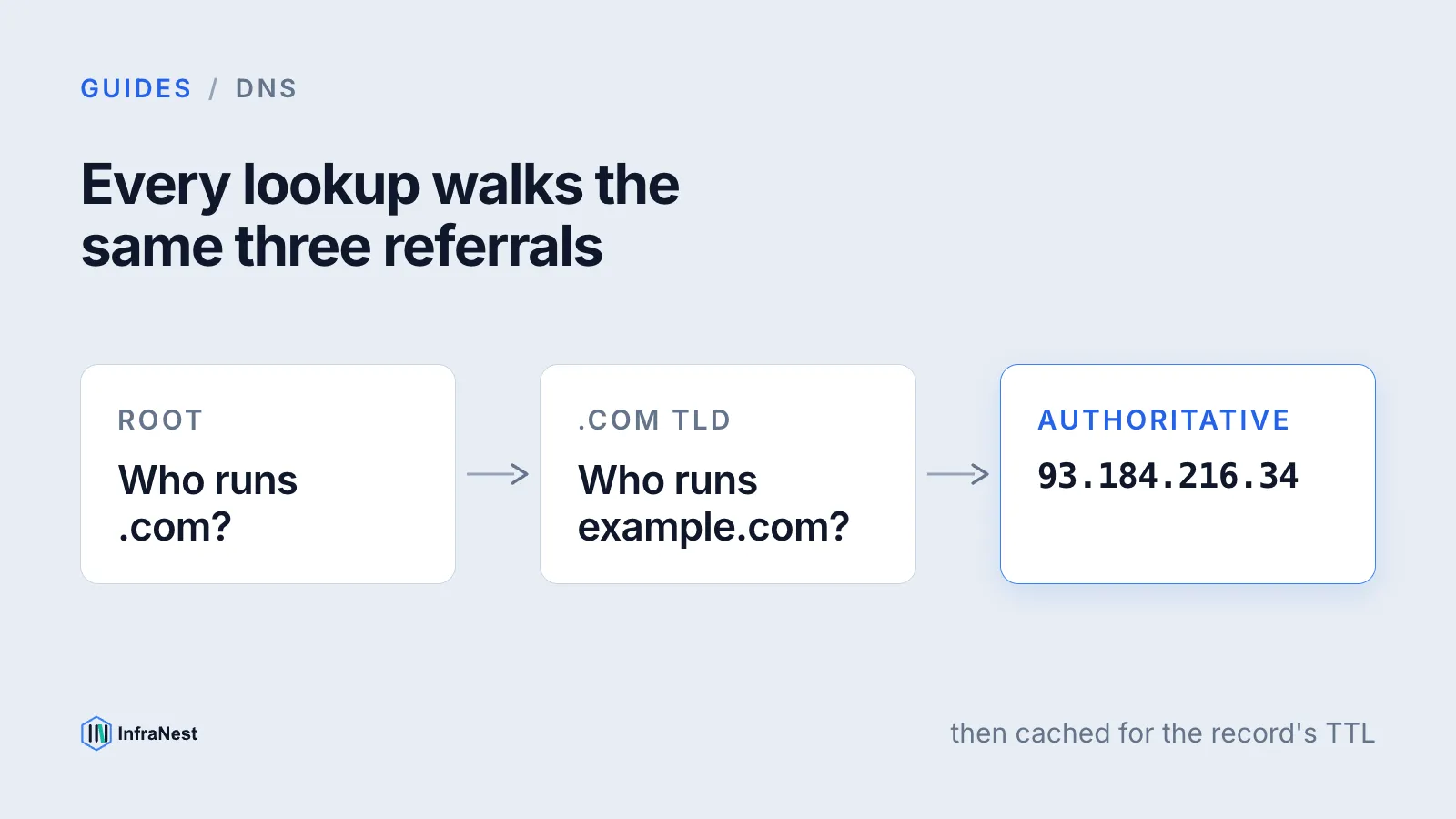
How DNS resolution works: the root-to-authoritative walk explained
A practical walkthrough of DNS resolution: recursive vs authoritative resolvers, the root→TLD→authoritative query path, and how caching affects speed.
Prêt en quelques secondes
Réunissez toute votre infrastructure dans un tableau de bord moderne.
Offre gratuite · Sans carte bancaire · Configuré en quelques minutes